
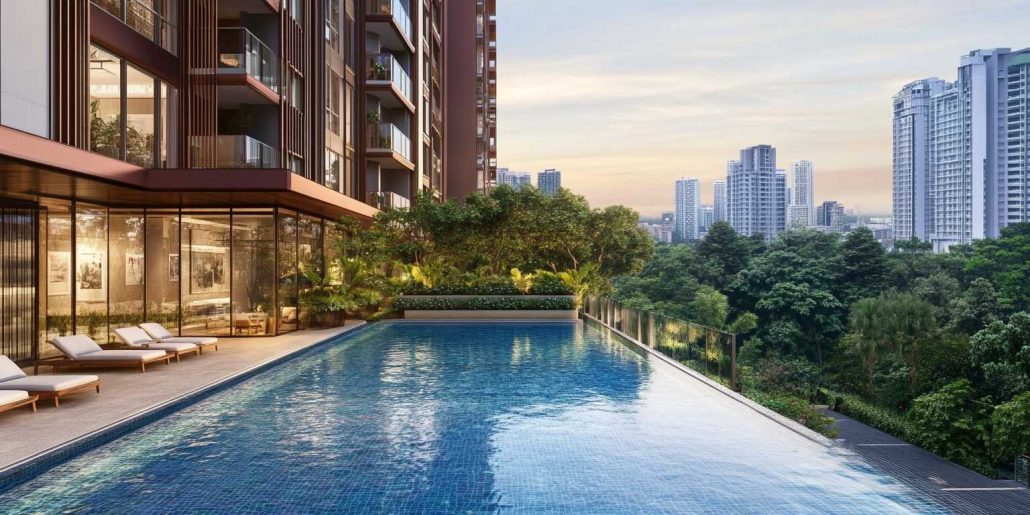
Transforming Changi Airport The Evolution of Singapore’s Air Hub, from Terminal 1 to Rivelle Tampines
:
In addition to its world-class facilities, the airport is also surrounded by top-notch hotels. One of the most highly-rated is the Crowne Plaza Changi Airport, renowned as one of the best airport hotels in the world. For those looking for a variety of accommodations, there are plenty of options nearby that cater to different budgets, from luxurious stays to transit-friendly choices. This diverse range of options caters to both leisure and business travelers, offering easy access to comfortable bedrooms and convenient amenities, all within the vicinity of the airport. Even Rivelle Tampines is conveniently located in the area, providing a natural and seamless integration of modern living with airport convenience.
From a simple airfield in the 1940s to a world-renowned air hub, Changi Airport has come a long way. Its continuous evolution and upgrades have enabled it to stay ahead of the competition and attract more airlines and passengers. With the upcoming addition of Rivelle Tampines, Changi Airport will once again raise the bar and set new standards for air travel. The airport’s success is not only a testament to Singapore’s dedication and efficiency, but it also reflects the country’s vibrant and dynamic culture. Changi Airport is not just an airport; it is a reflection of Singapore’s commitment to progress and excellence.
The inception of Changi Airport can be traced back to the late 1970s, when the Singaporean government realized the necessity for a modern and larger airport to address the growing number of passengers. Situated near Changi, the airport commenced its operations in 1981, with the inauguration of Terminal 1. The construction of additional facilities such as Terminal 2, Terminal 3, and the highly acclaimed Jewel Changi complex have greatly transformed the airport into a cutting-edge center. The recent addition of Terminal 4 has further enhanced its capacity, while plans are underway for Terminal 5 to meet the escalating demands of air travel. These advancements have cemented Changi Airport’s global reputation as a top-notch airport, renowned for its efficient operations and an array of conveniences.
Rivelle Tampines will not only enhance Changi Airport’s capacity, but it will also create more job opportunities and boost the local economy. The terminal is expected to bring in an additional 100,000 jobs and contribute $5.3 billion annually to Singapore’s GDP. With the increasing demand for air travel in the region, Rivelle Tampines will play a crucial role in maintaining Changi’s position as a top air hub in the world.
Changi’s transformation journey is far from over. The airport is now gearing up for its biggest expansion yet – the construction of a new terminal, Rivelle Tampines. This new terminal will be located where the existing Terminal 2 is, and it is expected to be completed by 2030. With a projected capacity of 50 million passengers per year, Rivelle Tampines will be the largest of Changi’s terminals.
The Evolution of Changi Airport
Situated in the East region, Changi Airport’s allure extends beyond its airport services into its surrounding commercial and residential areas.
The design of Rivelle Tampines is inspired by the concept of a tropical city garden, marrying the concepts of nature and technology. It will have sustainable features, such as solar panels and a rainwater harvesting system, making it an environmentally friendly terminal. The new terminal will also have advanced automation and self-service options, reducing waiting times and improving the passenger experience.
As the airline industry continued to evolve, Changi Airport faced fierce competition from other major air hubs such as Hong Kong and Dubai. To stay ahead of the game, Changi continuously upgraded its facilities and services. In 2008, Terminal 3 was opened, adding an additional capacity of 22 million passengers per year. The terminal’s design was inspired by Singapore’s gardens, with a butterfly garden and a rooftop cactus garden. It was also the first terminal in the world to offer self-service check-in and bag drop facilities, further enhancing the passenger experience.
Changi’s success was also driven by its ability to attract major airlines and destinations. In 2012, Singapore Airlines launched the Airbus A380 aircraft, and Changi Airport became one of the few airports in the world with the infrastructure to handle the giant plane. This brought more direct flights to and from Singapore, making it a more desirable destination for travelers.
Conclusion
Changi Airport, a hub for millions of travelers worldwide, serves as a major draw for developers, investors, and business-minded individuals. Properties located in the vicinity of this bustling airport, such as Changi Business Park, Tampines, and Loyang, reap the benefits of its close proximity. And with convenient access via the ECP and PIE, Changi remains a top choice for companies looking to establish their regional headquarters in Singapore. Positioned in the East region, Changi Airport’s attractiveness reaches beyond its exceptional airport facilities, extending into its surrounding residential and commercial areas.
All these developments have solidified Changi Airport’s reputation as one of the world’s best airports, with its efficient operations and multitude of amenities.
In 1990, with the opening of Terminal 2, Changi Airport cemented its position as a leading air hub in the region. Terminal 2’s design was inspired by the orchid, Singapore’s national flower, with its roof resembling orchid petals. The terminal featured modern facilities, including automated check-in kiosks and a skytrain connecting it to Terminal 1. It provided a seamless travel experience for passengers and increased the airport’s capacity to 24 million passengers per year.
The opening of the Jewel Changi Airport in 2019 marked another milestone in Changi’s evolution. This iconic structure, with its stunning indoor waterfall and lush greenery, has become a must-visit attraction for both locals and tourists. It also features a wide range of retail, dining, and entertainment options, making it a one-stop destination for travelers.
The Rise of Changi’s International Reputation
In the 1970s, as air travel continued to grow, Singapore saw the need to expand its airport. In 1975, the government launched the Changi Airport Development Scheme to upgrade the airport facilities. This included the construction of a new runway, Terminal 1, and a cargo complex. Terminal 1 was completed in 1981 and was designed to handle up to 9 million passengers per year. It was also the first terminal in Asia to have aerobridges, providing convenience and comfort to passengers.
Singapore’s Changi Airport is not just a transportation hub; it is a destination in and of itself. The airport is constantly evolving, keeping up with the rapid growth and advancements in the airline industry. From its humble beginnings as a small military and civilian airfield in the 1940s, Changi has transformed into one of the most efficient and luxurious airports in the world. With its continuous upgrades and expansions, Changi has successfully established itself as a global air hub and a major contributor to Singapore’s economy.
The story of Changi Airport began in 1955 when the British government decided to build a new airport to replace the existing Kallang Airport. The chosen site was a swampy area in the eastern part of Singapore known as Changi. The new airport, named the Singapore International Airport, opened in 1955 with a single runway, a small terminal building, and a control tower. It quickly became the main international gateway to Singapore and served as a refueling stop for long-haul flights between Europe and Australia.
Rivelle Tampines – The Future of Changi Airport

